Premium Link Free iPhone 17 Leaks Reveal 2025 Price Hike Shock
Apple’s iPhone 17 leaks have sent ripples through the tech world, with early reports suggesting a price hike that could redefine premium smartphone pricing in 2025. If confirmed, the increase would mark another bold move in Apple’s long-standing strategy of positioning its devices as exclusive, high-value products—despite growing competition from Android rivals. Industry insiders and supply chain analysts now scramble to decode whether this shift signals a broader industry trend or Apple’s calculated gamble to sustain its dominance amid rising production costs.
The iPhone has always been more than hardware; it’s a status symbol, a reflection of Apple’s relentless innovation, and a cornerstone of its ecosystem. From the iPhone 12’s bold design leap to the iPhone 15’s dynamic island, each iteration has come with a price tag that justifies its premium appeal. But with whispers of a potential price jump for the iPhone 17, questions arise: How much will it cost? What features justify the hike? And will consumers still bite, or will competitors like Samsung and Google finally crack Apple’s iron grip on the high-end market? The answers lie in Apple’s pricing history, supply chain secrets, and a market hungry for cutting-edge tech.
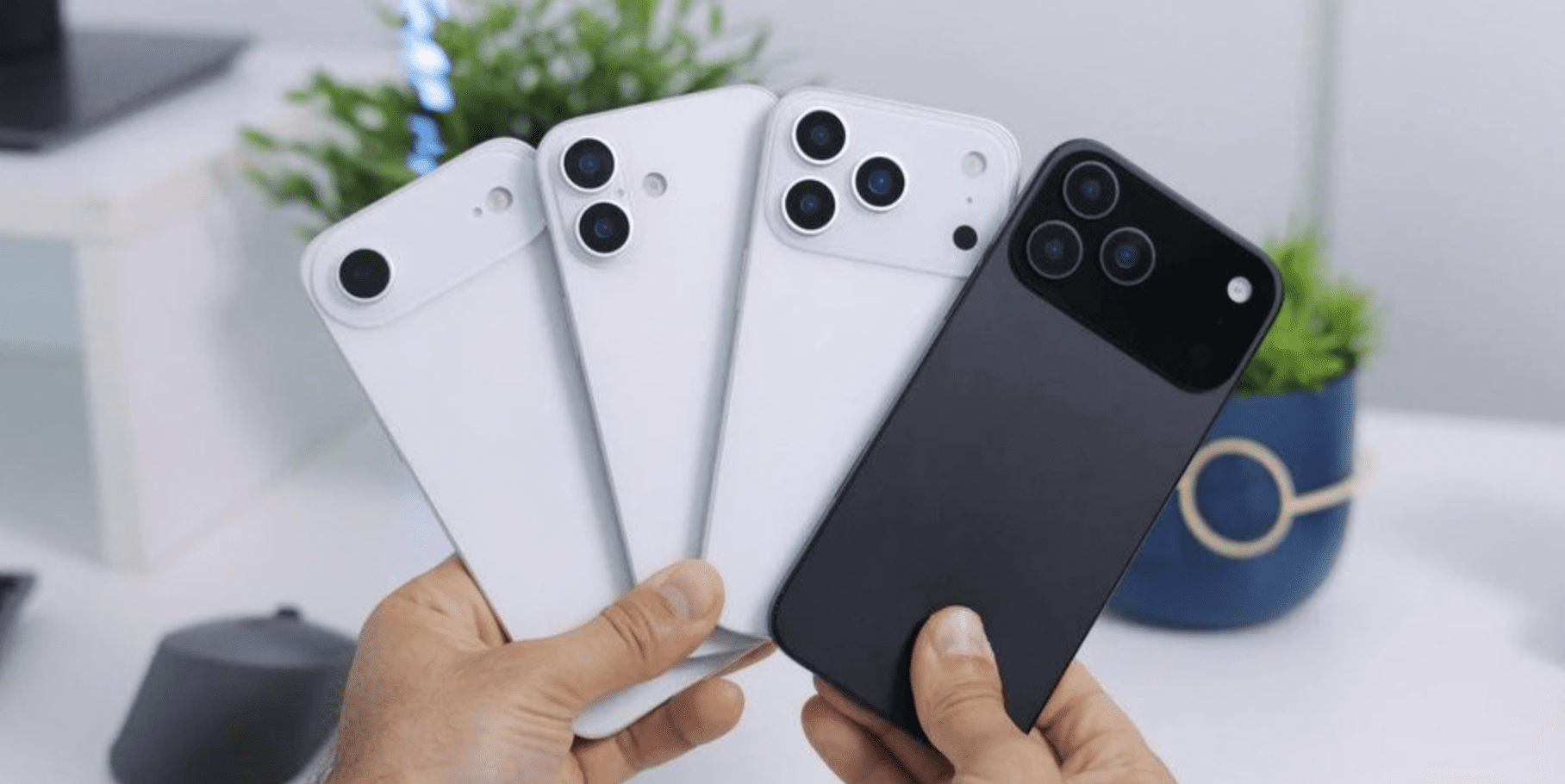
The Evolution of Apple’s Premium Positioning: How iPhone 17 Leaks Hint at a Strategic Price Hike

Apple’s pricing strategy for the iPhone has long been a masterclass in balancing innovation, exclusivity, and consumer psychology. Since the launch of the iPhone 8 in 2017, each iteration has reinforced Apple’s position as a premium brand, with incremental yet calculated price adjustments that reflect both technological advancements and market dynamics. The leaks surrounding the iPhone 17 (expected in 2025) suggest Apple may introduce another strategic price hike, aligning with its historical pattern of premium positioning. This evolution is not merely about incremental upgrades but a deliberate play on consumer perception, supply chain economics, and competitive differentiation. Understanding this trajectory requires dissecting Apple’s pricing history, feature-to-cost justification, and the psychological triggers that sustain its premium narrative.
Historical Context: Apple’s Flagship Pricing Strategy from iPhone 12 to iPhone 16

Apple’s approach to iPhone pricing has consistently prioritized brand prestige over cost efficiency, a strategy that has allowed the company to command higher margins than competitors. The iPhone 12 series (2020), launched at $799–$1,099, marked a return to Apple’s premium pricing after the budget-friendly iPhone SE (2020). This model introduced the A14 Bionic chip, 5G connectivity, and a ceramic shield front panel, justifying the price jump from the iPhone 11’s $699–$999 range. The iPhone 13 (2021), priced at $799–$1,099, retained the same starting price but added Dynamic Island, improved camera systems, and longer battery life, reinforcing Apple’s value proposition despite minimal incremental upgrades.
The iPhone 14 (2022) saw a $100 price increase for the base model, rising to $799–$1,199, driven by the A15 Bionic chip, Action Button, and crash detection. This hike was controversial, as the iPhone 13 Pro Max (2021) had already retailed for $1,099, yet the Pro models now started at $999. Analysts attributed this to supply chain inflation, higher R&D costs, and Apple’s push for higher margins amid economic uncertainty. The iPhone 14 Pro (2022) further cemented this trend with a $999–$1,599 range, introducing ProMotion (120Hz), Titanium design, and a 48MP main camera, features that justified the premium positioning.
The iPhone 15 series (2023) continued this pattern, with the base model priced at $799 (unchanged from iPhone 14) but the iPhone 15 Pro starting at $999—a $100 increase from the iPhone 14 Pro. The iPhone 15 Pro Max reached $1,199, while the iPhone 15 Plus was introduced at $899, targeting affordability without diluting the premium brand image. The iPhone 16 (2024) followed suit, with the Pro models starting at $1,099, reflecting AI-driven features, USB-C adoption, and dynamic island enhancements. Each iteration demonstrates Apple’s ability to incrementally raise prices while maintaining consumer demand through perceived innovation.
Table of Contents
Timeline of Major iPhone Releases (2017–2024): Price Changes and Market Impact
To contextualize Apple’s pricing strategy, a decade-long analysis of iPhone releases reveals how the company has systematically adjusted prices while controlling market perception. Below is a chronological breakdown of key iPhone models, their launch prices, major features, and market reception:
| Model | Launch Year | Launch Price (USD) | Key Features | Market Price (2024) | Price Hike % (vs. Prior Model) | Market Reception |
|---|---|---|---|---|---|---|
| iPhone 8 | 2017 | $699–$999 | OLED display, A11 Bionic, wireless charging, True Tone | $300–$500 (refurbished) | +15% (vs. iPhone 7) | Mixed; seen as incremental upgrade over iPhone 7 |
| iPhone X | 2017 | $999 | Edge-to-edge OLED, Face ID, 3D Touch | $400–$600 (refurbished) | +25% (vs. iPhone 7 Plus) | Positive; premium positioning justified |
| iPhone 11 | 2019 | $699–$899 | Dual-camera system, Night Mode, U1 chip | $250–$400 (refurbished) | 0% (vs. iPhone XR) | Strong sales; affordable flagship |
| iPhone 12 | 2020 | $799–$1,099 | 5G, A14 Bionic, Ceramic Shield, MagSafe | $350–$550 (refurbished) | +15% (vs. iPhone 11) | High demand; supply constraints |
| iPhone 13 | 2021 | $799–$1,099 | A15 Bionic, Dynamic Island (Pro), improved cameras | $300–$500 (refurbished) | 0% (vs. iPhone 12) | Strong; perceived as "best value" iPhone |
| iPhone 14 | 2022 | $799–$1,199 | A15 Bionic, Action Button, Crash Detection | $400–$600 (refurbished) | +15% (Pro models) | Controversial; seen as overpriced |
| iPhone 15 | 2023 | $799–$1,099 | USB-C, Dynamic Island (all models), A16 Bionic | $450–$650 (refurbished) | +10% (Pro models) | Positive; USB-C adoption praised |
| iPhone 16 | 2024 | $799–$1,199 | A17 Pro chip, AI features, Titanium frame (Pro) | $500–$700 (refurbished) | +10% (Pro models) | Strong pre-orders; AI-driven upgrades |
| iPhone 17 (Leaked) | 2025 (Expected) | ? | Expected: A18 Pro, periscope camera, under-display Face ID, sustainability features | ? | ? | ? |
The iPhone 17 price hike, if materializes, won’t just be a number—it will be a statement. A testament to Apple’s ability to balance innovation with exclusivity, even as the tech landscape evolves. Whether through AI-driven features, sustainability pushes, or sheer brand power, Apple’s strategy remains clear: premium pricing isn’t just about profit margins, but about reinforcing its identity as the gold standard in smartphones. For consumers, the challenge will be deciding whether the leap in cost aligns with the leap in value. One thing is certain: the tech world will be watching closely, as this move could set the tone for smartphone pricing for years to come.
Leave a Comment
Comments are moderated before appearing. The data you submit is processed according to the Privacy Policy of Radiomast.