marvel rivals sue storm game no ads download full guide
The Marvel universe has once again expanded its mobile gaming horizons with Marvel Rivals: Sue Storm, a title that redefines turn-based combat through the iconic Invisible Woman’s signature abilities. Unlike traditional Marvel mobile games, this spin-off merges strategic depth with Sue Storm’s signature powers—from invisibility cloaks to energy projections—creating a niche experience that demands mastery. Players must navigate a carefully balanced mix of offensive prowess and defensive precision, where every move could mean the difference between victory and defeat in high-stakes PvP or epic boss battles.
Yet beyond its tactical gameplay lies a narrative that dives deep into Sue Storm’s lore, weaving classic Marvel storylines into an accessible mobile format. From her tumultuous relationship with Reed Richards to her battles against long-time foes like Doctor Doom, the game offers a rare blend of character-driven storytelling and tactical gameplay. However, as enthusiasm grows, so do ethical concerns surrounding unauthorized downloads and ad-free versions—a topic that raises critical questions about player safety, developer support, and the long-term sustainability of mobile gaming ecosystems.
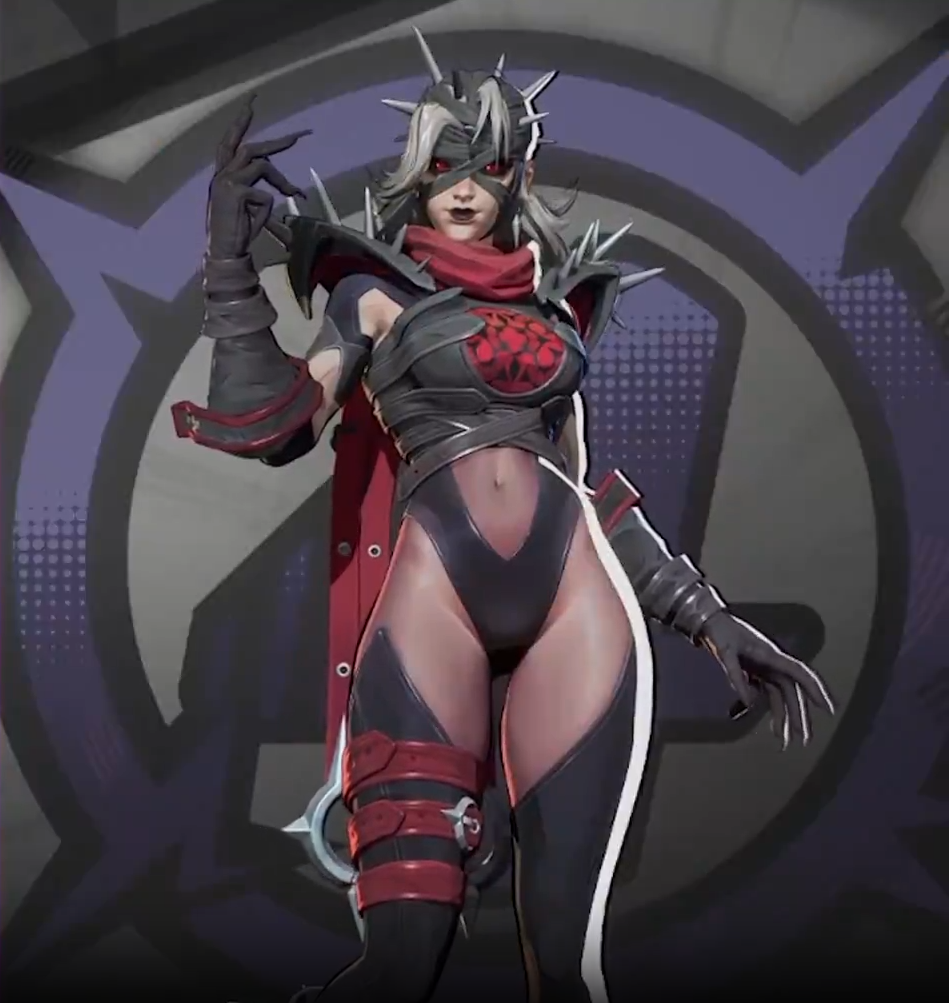
Foundational Gameplay Mechanics and Core Features of Marvel Rivals: Sue Storm

Sue Storm in Marvel Rivals redefines turn-based combat by integrating Inhumans’ strategic depth with Sue’s signature powers, creating a hybrid system that prioritizes positioning, adaptability, and resource optimization. Unlike traditional Marvel mobile games, this title emphasizes real-time tactical decision-making within a turn-based framework, blending elements of Marvel Future Fight’s action combat with Marvel Snap’s card-based mechanics. The core gameplay revolves around three pillars: terrain manipulation, ability synergy, and power projection, where Sue’s invisibility, force fields, and energy blasts become decisive tools rather than secondary effects. Below is a breakdown of how these mechanics function and differentiate Marvel Rivals: Sue Storm from its peers, alongside a comparative analysis of its combat system.
Turn-Based Combat Structure and Strategic Positioning

The game’s combat system operates on a modified turn-based grid, where each character occupies a 3x3 cell battlefield. Players alternate turns, but actions are not strictly sequential—instead, they unfold in phases: Movement, Ability Activation, and Attack Resolution. Sue Storm’s mechanics introduce dynamic positioning as a core strategy, allowing her to: - Teleport between cells mid-turn to disrupt enemy formations or reposition allies. - Generate force fields that block projectiles or create safe zones for teammates. - Project energy blasts in a 360-degree arc, affecting multiple foes simultaneously.
This system contrasts sharply with Marvel Future Fight’s real-time action combat, where reflexes dictate outcomes, or Marvel Snap’s snapshot-based card pulls, which rely on probabilistic luck. In Marvel Rivals: Sue Storm, preemptive positioning—such as placing Sue adjacent to a high-damage ally to shield them—becomes a winning condition. The grid also supports terrain effects, where Sue can invisibilize herself to avoid attacks or materialize behind enemies for guaranteed hits.
"Positioning in Marvel Rivals: Sue Storm is not just about cover—it’s about controlling the flow of battle through spatial dominance."
Sue Storm’s Signature Powers and Their Unique Applications
Sue Storm’s abilities are categorized into three tiers: Basic (Common), Advanced (Rare), and Legendary (Epic), each unlocking progressively complex interactions. Below is a rarity-tier breakdown of her core powers, along with their in-game applications and visual execution:
Table of Contents
- Foundational Gameplay Mechanics and Core Features of Marvel Rivals: Sue Storm
- Turn-Based Combat Structure and Strategic Positioning
- Sue Storm’s Signature Powers and Their Unique Applications
- Comparison of Combat Mechanics Across Marvel Mobile Games
- Marvel Rivals: Sue Storm – Storyline & Narrative Depth
- Sue Storm’s Role in the Marvel Universe and Fantastic Four Dynamics
- Chronological Summary of Key Story Arcs and Plot Twists
- Adapting Classic Marvel Storylines for Mobile Gameplay
- Fan-Favorite Sue Storm Comic Storylines and Their Influence on the Game
- No Ads & Download Methods – Ethical and Technical Considerations in Marvel Rivals: Sue Storm
- Ethical Implications of Pirated or Ad-Modified Versions
- Legally Obtaining Marvel Rivals: Sue Storm Without Ads or Pirated Downloads
- Technical Methods to Reduce Ads Without Violating Terms of Service
- Safe vs. Risky Sources for Downloading Mobile Games: A Comparative Guide
- Sue Storm’s Powers & Combat Strategies – Advanced Tactics in Marvel Rivals
- Sue Storm’s Most Powerful Abilities – Cooldowns, Damage, and Synergy
- Ranked List of Sue Storm’s Top 5 Powers for Beginners and Veterans
- Advanced Combat Strategies for Maximizing Sue Storm’s Potential
-
Basic Tier (Common)
- Invisibility (Passive) – Sue becomes undetectable for 3 seconds after using an ability, making her immune to targeted attacks. This is critical for flanking maneuvers or resetting combos after taking damage.
- Force Field (Active) – Deploys a shatterproof barrier in a selected cell, blocking all projectiles for 2 turns. Ideal for protecting low-HP allies or disrupting enemy snipers.
-
Advanced Tier (Rare)
- Energy Projection (Charged Attack) – Fires a wide-area energy blast that pierces through enemies, dealing scaled damage based on distance. At max charge, it stuns foes for 1 turn, enabling follow-up attacks.
- Telekinetic Lift (Utility) – Lifts an ally or enemy vertically off the grid, causing them to skip their next turn (if an enemy) or position them optimally (if an ally). This ability rewrites battlefield control.
-
Legendary Tier (Epic)
- Quantum Lock (Ultimate) – Freezes all enemies in place for 2 turns, allowing Sue to reposition allies or target weakened foes without interference. Visually, this ability is represented by blue energy chains binding enemies to their cells.
- Molecular Reconstruction (Healing) – Restores 50% HP to Sue and one ally, while dissipating all debuffs. The animation features golden energy tendrils reforming Sue’s body before extending to her teammate.
Sue’s powers synergize with her teammates—for example, pairing her Force Field with Black Bolt’s sonic screams creates an unbreakable defense—while her Telekinetic Lift can counter enemy snipers by elevating them mid-attack. This ability cross-pollination is a hallmark of Marvel Rivals: Sue Storm, distinguishing it from Marvel Future Fight’s linear combo chains or Marvel Snap’s isolated card effects.
Comparison of Combat Mechanics Across Marvel Mobile Games
The table below contrasts Marvel Rivals: Sue Storm with Marvel Future Fight and Marvel Snap, focusing on turn structure, resource management, and special ability deployment. Key differences highlight why Sue Storm carves a niche as a tactical hybrid:
| Feature | Marvel Rivals: Sue Storm | Marvel Future Fight | Marvel Snap | |||||||||||||||||||||||||||||||||||||||||||||||||||||||
|---|---|---|---|---|---|---|---|---|---|---|---|---|---|---|---|---|---|---|---|---|---|---|---|---|---|---|---|---|---|---|---|---|---|---|---|---|---|---|---|---|---|---|---|---|---|---|---|---|---|---|---|---|---|---|---|---|---|---|
| Turn Structure |
|
|
|
|||||||||||||||||||||||||||||||||||||||||||||||||||||||
| Resource Management |
|
|
|
|||||||||||||||||||||||||||||||||||||||||||||||||||||||
| Special Abilities |
|
|
Marvel Rivals: Sue Storm – Storyline & Narrative DepthSue Storm’s journey in Marvel Rivals transcends the typical mobile superhero narrative, weaving a rich tapestry of character-driven drama, cosmic threats, and the enduring bonds of the Fantastic Four. Unlike many Marvel mobile titles that prioritize combat mechanics or collectible roster management, Marvel Rivals: Sue Storm immerses players in a deeply layered storyline that mirrors her evolution from a reluctant hero to a formidable leader. The game’s narrative draws heavily from her iconic comic book arcs, adapting them into an interactive experience where player choices subtly influence her decisions—ranging from personal conflicts with Reed Richards to high-stakes battles against villains like Doctor Doom. This section explores the game’s storyline, its fidelity to source material, and how it distinguishes itself through narrative depth compared to other Marvel mobile titles.Sue Storm’s Role in the Marvel Universe and Fantastic Four DynamicsSue Storm’s position within Marvel’s universe is pivotal, serving as both the emotional core of the Fantastic Four and a key strategist in their battles against extraterrestrial and interdimensional threats. In Marvel Rivals, her role is framed through three interconnected narratives: personal growth, team leadership, and cosmic responsibility. The game emphasizes her dynamic with Reed Richards, balancing their romantic partnership with the professional tensions that arise when their scientific and emotional priorities clash. For example, missions involving the Baxter Building often highlight their debates over risk-taking versus caution, mirroring classic comic arcs like Fantastic Four #212–217 ("The Thing and the Invisible Woman"), where Sue’s frustration with Reed’s secrecy about his experiments drives her to explore her own powers independently. The game also underscores Sue’s leadership within the Fantastic Four, portraying her as the mediator during conflicts involving Johnny Storm (Human Torch) or Ben Grimm (The Thing). Optional dialogue choices in side quests allow players to witness her diplomatic prowess, such as when she negotiates between Reed and Johnny over reckless missions. Her interactions with villains further define her character: Doctor Doom, a recurring antagonist, is depicted not just as a physical threat but as a ideological adversary whose arrogance clashes with Sue’s humility and strategic mind. The game’s adaptation of Fant4stic (a crossover event featuring the Fantastic Four’s younger selves) reinforces her mentorship role, showing her guiding the team with patience while grappling with her own insecurities.Chronological Summary of Key Story Arcs and Plot TwistsMarvel Rivals: Sue Storm structures its narrative in a non-linear but chronologically anchored format, blending original content with retellings of her most defining comic storylines. The game’s main campaign begins with Sue’s early days as Invisible Woman, where she struggles with the limitations of her powers and her identity outside the Fantastic Four. Early missions reflect her struggles with invisibility, such as a side quest where she must navigate a social event undetected, paralleling her comic book arcs where she grapples with isolation (Invisible Woman #1–13). The narrative then progresses to her marriage to Reed Richards, a pivotal moment in both comics and the game, where their wedding is interrupted by a Skrull invasion—a twist that forces Sue to confront her fears of vulnerability while embracing her role as a protector. One of the game’s standout arcs involves Mysterio, adapted from Fantastic Four Annual #11 and Invisible Woman #1–6. In the game, Mysterio’s illusions target Sue’s insecurities, exploiting her past failures and her relationship with Reed. The climax features a psychological battle where Sue must outmaneuver his tricks by using her empathy and foresight, a departure from the comics where her victory relies on Reed’s intervention. This adaptation highlights the game’s focus on Sue’s internal resilience rather than brute strength. Another major twist occurs during the Silver Surfer storyline, where Sue is forced to collaborate with the cosmic entity to stop a threat from the Negative Zone. The game’s portrayal of their uneasy alliance reflects her comic book arcs (Fantastic Four #121–123) but adds a layer of moral ambiguity, as Sue questions whether the ends justify the Surfer’s past actions. The game’s final arc revolves around Doctor Doom’s resurgence, drawing from Fantastic Four #500 and Invisible Woman’s solo runs. Sue’s confrontation with Doom is framed as a test of her strategic intelligence rather than raw power, with the game emphasizing her use of illusions and psychological warfare to outsmart him. A key moment occurs when she manipulates his ego by pretending to underestimate him, a tactic inspired by her comic book battles where she exploits his pride. The arc concludes with Sue redefining her leadership within the Fantastic Four, signaling her growth from a supportive member to a decisive leader capable of making hard choices for the team’s future.Adapting Classic Marvel Storylines for Mobile GameplayThe writers of Marvel Rivals: Sue Storm faced the challenge of condensing decades of comic book lore into digestible, interactive segments while preserving the emotional weight of Sue’s character. To achieve this, they employed several strategies:Fan-Favorite Sue Storm Comic Storylines and Their Influence on the GameThe game’s narrative is deeply indebted to Sue Storm’s most beloved comic arcs, several of which have left an indelible mark on her character. Below are key storylines and their impact on Marvel Rivals:"The Invisible Woman’s greatest strength has always been her ability to see beyond the surface—both in her powers and in her relationships." — Stan Lee (Fantastic Four #1, 1961) No Ads & Download Methods – Ethical and Technical Considerations in Marvel Rivals: Sue StormMobile gaming thrives on accessibility, but ethical and technical pitfalls often accompany the pursuit of ad-free experiences or free downloads. Marvel Rivals: Sue Storm, like many mobile games, relies on monetization models that include advertisements to fund development, server maintenance, and updates. Seeking unauthorized "no ads" versions or pirated downloads not only undermines the game’s sustainability but also exposes users to significant security risks, such as malware, data theft, and device compromise. Meanwhile, legitimate methods exist to mitigate ads and obtain the game legally, ensuring a safer and more sustainable gaming experience. This section explores the ethical implications of pirated or ad-modified versions, outlines legal acquisition methods, and provides technical solutions to reduce ads without violating terms of service. Additionally, it examines common scams targeting Marvel Rivals players and offers strategies to verify the legitimacy of download sources.Ethical Implications of Pirated or Ad-Modified VersionsThe decision to download pirated or "no ads" versions of Marvel Rivals: Sue Storm raises ethical concerns that extend beyond personal convenience. Developers and publishers invest substantial resources—time, talent, and capital—in creating high-quality games, including narrative depth, character development, and technical polish. Revenue from advertisements, in-app purchases, and other monetization strategies directly funds these efforts. When players bypass ads or download pirated copies, they deprive developers of critical income, potentially stifling future updates, bug fixes, and expansions. > Ethical considerations include: > - Supporting Creators: Every ad viewed or purchase made contributes to the game’s longevity. Pirated versions eliminate this support entirely. > - Job Security: Development teams, artists, and QA testers rely on revenue streams to sustain their livelihoods. Piracy indirectly threatens these careers. > - Game Quality: Reduced funding may lead to slower updates, fewer content patches, or even premature shutdowns of the game. > - Legal Consequences: Downloading pirated games violates copyright laws, which can result in legal action, fines, or account bans in extreme cases. Beyond ethics, pirated versions pose severe security risks. Many third-party sites distribute malware-laden APK files, which can steal personal data, install spyware, or lock devices through ransomware. Fake "no ads" patches or modified APKs often contain hidden tracking scripts, phishing links, or backdoors that compromise user privacy. The absence of official vetting in these sources means users cannot trust the integrity or safety of the files.Legally Obtaining Marvel Rivals: Sue Storm Without Ads or Pirated DownloadsPlayers seeking an ad-free or legally obtained copy of Marvel Rivals: Sue Storm have several legitimate avenues. While the game may not offer a built-in "no ads" mode, users can minimize ad exposure through official channels, promotions, and in-game adjustments. Below are verified methods to acquire the game legally and reduce ad interruptions: Mobile games like Marvel Rivals: Sue Storm are officially distributed through platforms such as:Technical Methods to Reduce Ads Without Violating Terms of ServiceWhile developers rarely offer a true "no ads" option in mobile games, players can employ technical workarounds to minimize ad exposure legally. These methods focus on ad-blocking tools, in-game settings, and device optimizations that comply with terms of service. Below are actionable steps: Ad blockers like uBlock Origin (for Android via Firefox or third-party browsers) or 1Blocker (iOS) can filter out ads served by the game. However, users must:Safe vs. Risky Sources for Downloading Mobile Games: A Comparative GuideNot all download sources are created equal. While convenience may drive users toward third-party sites, the risks often outweigh the benefits. Below is a responsive table categorizing safe and risky sources for downloading mobile games, including red flags and trusted alternatives:
|
Leave a Comment
Comments are moderated before appearing. The data you submit is processed according to the Privacy Policy of Radiomast.